In this article
People choose a glazier, a locksmith or an installer partly on what they can see. Photographs of completed work do a job that words cannot: they show standards, finish and care. Anything that makes that evidence less trustworthy works against you.
That is why motion on a trade website needs a different starting point from motion on, say, a travel brand. The question is not how dramatic the movement can be. It is how to add atmosphere without changing what the photograph shows.
Start with real photography, animate the atmosphere around it, and be honest about anything that is not real.
What does animated photography mean?
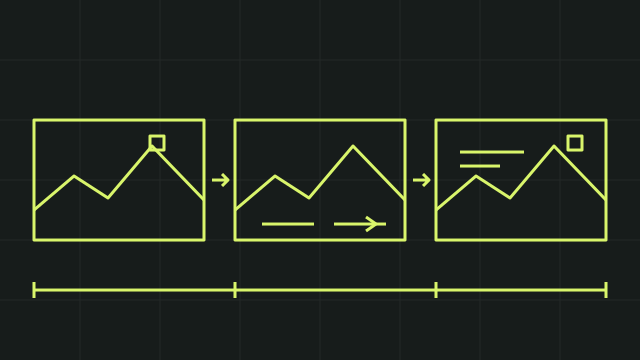
It means taking a real photograph and adding restrained movement: a slow camera push, shifting light, a reflection moving across glass. The subject remains exactly what it was. The movement makes the page feel considered without altering the truth of the image.
What to animate, and what to leave alone
Animate: light, reflections, weather, a gentle camera move and atmosphere.
Leave alone: the shape of a product, the details of a finish, the people in the frame and anything a customer might rely on when judging your work.
When AI-generated imagery is the wrong choice
Generated imagery is the wrong choice whenever a visitor could take it as evidence: a finished installation, your premises, your team, your customers or a before-and-after result. UK advertising rules expect marketing not to mislead customers, and a fabricated image of your own work can do exactly that, whatever the intention.
It also puts your reputation at risk. If a customer later notices that the image does not match the job they were shown, the damage is to trust, and trust is what a trade business sells.
When concept imagery is fine
Atmosphere is different. An abstract background, a mood image or a stylised scene that makes no claim about your work can be created with AI-assisted tools. The test is simple: would a visitor reasonably think this shows our actual work? If so, use real photography.
How to brief it well
- Choose photographs with room to breathe. Space for a headline matters.
- Use large, sharp files. Motion exposes weak resolution.
- Check permissions. People in photographs need to have agreed to this use.
- Think about mobile. A crop that works on a wide screen may need rethinking on a phone.
Plan the page around the still
The still image should be the first thing loaded and the fallback for anyone who prefers reduced motion. Treat the clip as an addition to a page that already works.
If you are unsure whether your page is ready, our guide to why a business website may not be generating enough enquiries is a sensible place to check the basics first.
Keep the labelling honest
Tell your visitors, in a short line near the banner or in the page credits, where an image is AI-assisted concept imagery. Keep the original photographs on file. It is a small habit that protects your credibility.
A practical way to start
Pick your best photograph of finished work. Decide what you would like the first few seconds of your page to feel like. Ask for a quote that states whether each banner is animated photography or concept imagery. If you would like the wider picture first, read our overview of cinematic website banners.
Frequently asked questions
Can you animate any photograph?
Many, but not all. Sharp, well-composed images with some depth animate best.
Will the animation change how my work looks?
It should not. We animate light and atmosphere, not your products or finishes.
Do I have to disclose AI use?
For concept imagery we recommend it, and we do it ourselves. It builds trust.
What if a photograph includes customers or staff?
We need confirmation that they have agreed to this use before we animate it.
Let the work speak
The most persuasive thing a trade website can show is real work done well. Motion can frame that work with a little more care, provided it never competes with it or misrepresents it.
At TRADEWORKS, we combine more than 20 years of hands-on SEO experience with bespoke website development and design. Our Cinematic Motion Studio starts with your own photography and states clearly whenever an image is concept rather than real.
If you have photography worth bringing to life, tell us about your website through our enquiry form and we can suggest the right starting point.